Eleven independent authors representing many genres have created a rafflecopter contest with a grand prize of a Kindle paperwhite (or gift card equivalent beyond the US), gift cards, and free ebooks.
A $50 gift card will be awarded this Saturday, Nov. 10, and $25 gift cards next week. Each person has 12 chances to win--enter on the contest main page http://www.booksafire.com and go from there to each author's website and enter again.
This contest uses Rafflecopter. Entries will be combined from all submissions for the drawings.
The first winner of 11 ebooks was Cheryl Todd.
GOOD LUCK!
Thursday, November 8, 2012

Thursday, August 16, 2012
Moving to Wordpress!
I've a new Wordpress site. I hope you'll follow me there, because in a few months I'll abandon this one.
http://www.carolervin.com
http://www.carolervin.com
Friday, August 10, 2012
A Cure for the Backwards Apostrophe in Word '07
I'm so proud of my discovery that I have to tell the world. I learned how to solve a Microsoft Word problem, no thanks to Word Help or online Q & A's.
" '
The marks above are straight quotes and a straight apostrophe or single quote mark, relics of the typewriter age. A straight apostrophe can never be backwards. But it's not the mark you expect to see in professionally printed documents.
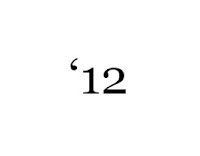 Microsoft Word Help and other online documents tell you how to change your straight quotes to curly quotes or "smart" quotes. Trouble is, smart quotes are not all that smart. Sometimes the apostrophe, which is the same as the single quote key, comes out backwards.
The backwards apostrophe will appear in contractions like years (graduate of '12) or slang (get 'em!) if you've changed your preferences to smart (curly) quotes. Your curly apostrophes will be fine in words like can't, where the apostrophe is inside a word. But when it comes first, like contractions of years or other slang usage, the curly quote will be backwards.
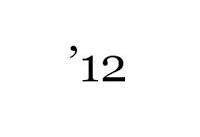 I've been frustrated by this, because though I've used Windows for several years, I used to work exclusive on Macs, and regularly used a keyboard shortcut to type curly quotes and correct, left-curling apostrophes.
Since Mac features seem to occur also in Windows, I engaged my finger-memory and pressed various control keys in combination with the quote/apostrophe key. And suddenly I found it.
You've read enough, so here's the procedure. When typing an apostrophe that comes first in its word, press these keys: Control/FN/and hit the apostrophe key twice. To fix an existing backwards quote, select it, then press Control/FN and hit the apostrophe key twice.
I haven't checked other PC keyboards to see if they're all laid out like mine (HP), but on my laptop the FN key is to the right of the Control (ctrl) key.
So there you go. Let me know if this procedure does/doesn't work for you.
" '
The marks above are straight quotes and a straight apostrophe or single quote mark, relics of the typewriter age. A straight apostrophe can never be backwards. But it's not the mark you expect to see in professionally printed documents.
 Microsoft Word Help and other online documents tell you how to change your straight quotes to curly quotes or "smart" quotes. Trouble is, smart quotes are not all that smart. Sometimes the apostrophe, which is the same as the single quote key, comes out backwards.
 The backwards apostrophe will appear in contractions like years (graduate of '12) or slang (get 'em!) if you've changed your preferences to smart (curly) quotes. Your curly apostrophes will be fine in words like can't, where the apostrophe is inside a word. But when it comes first, like contractions of years or other slang usage, the curly quote will be backwards.
 I've been frustrated by this, because though I've used Windows for several years, I used to work exclusive on Macs, and regularly used a keyboard shortcut to type curly quotes and correct, left-curling apostrophes.
Since Mac features seem to occur also in Windows, I engaged my finger-memory and pressed various control keys in combination with the quote/apostrophe key. And suddenly I found it.
You've read enough, so here's the procedure. When typing an apostrophe that comes first in its word, press these keys: Control/FN/and hit the apostrophe key twice. To fix an existing backwards quote, select it, then press Control/FN and hit the apostrophe key twice.
I haven't checked other PC keyboards to see if they're all laid out like mine (HP), but on my laptop the FN key is to the right of the Control (ctrl) key.
So there you go. Let me know if this procedure does/doesn't work for you.
Wednesday, July 11, 2012
A Good Title
Because a few readers said they did not like the title of THE GIRL ON THE MOUNTAIN, my current novel-in-progress, I conducted a survey of people who have and have not read the story. I gave a choice of fifteen possible titles to friends and family and asked them to pick one that might lead to a closer inspection of the book. From those who had not read the story, I wanted a gut reaction. From those who'd read it, I wanted to know if another title might work better.
Here are the results:
1. The Girl on the Mountain: 7 votes from those who have not read the story plus 2 from those who have. Amy, who hasn't read the story, said the title suggests "historical," which she likes. Jennifer, who has read it, said the title raises questions and better suits the story. Why I like the title: until she moves down from the mountain, May Rose, the main character, doesn't know people call her "the girl on the mountain." Throughout the story, she struggles to overcome their opinions.
2. Where Whispers Echo: 8 votes, all from people who have not read it. How this title works: A well-meaning character in the story tells May Rose it doesn't matter if she's innocent of the slander against her, because "nothing truly interesting happens here, so a whisper echoes all over the mountains, and people don't know or don't care if it's true or not." This title is poetic but may suggest a romance, which the story is not.
Votes were scattered among nine other title ideas.
Here are the results:
1. The Girl on the Mountain: 7 votes from those who have not read the story plus 2 from those who have. Amy, who hasn't read the story, said the title suggests "historical," which she likes. Jennifer, who has read it, said the title raises questions and better suits the story. Why I like the title: until she moves down from the mountain, May Rose, the main character, doesn't know people call her "the girl on the mountain." Throughout the story, she struggles to overcome their opinions.
2. Where Whispers Echo: 8 votes, all from people who have not read it. How this title works: A well-meaning character in the story tells May Rose it doesn't matter if she's innocent of the slander against her, because "nothing truly interesting happens here, so a whisper echoes all over the mountains, and people don't know or don't care if it's true or not." This title is poetic but may suggest a romance, which the story is not.
Votes were scattered among nine other title ideas.
Before as Strangers: A quote from Longfellow's Evangeline, used in the story.
Sounds of the Rude World: A quote from Stephen Foster's "Beautiful Dreamer," used in the story.
Fair and Young: Evangeline
Never Falter, Never Fail: A phrase from "Life is Like a Mountain Railroad" (old hymn). A theme in the story.
As Leaves to the Light: Evangeline
Company Town: Appropriate because most of the story is set in a company town in 1899.
Prayers and Lies: I like this one because the main character prays constantly and also lies, as do others in the story.
Down in the Valley: The site of the company town.
Unsafe: A theme.
Conclusions:
I had fun with this exercise, which confirmed my belief that titles create different expectations. A title, however, is only one lure. The cover must also be appropriate and interesting to people who like a certain kind of fiction, and the cover blurb has to suggest an intriguing story. Finally, the first few paragraphs must capture the reader's imagination and cause him or her to read the whole story!
Next Round: Reactions to a cover and cover blurb.
Thanks, everyone!
Friday, May 11, 2012
The Real Message in the Stars
I wish Amazon used a star system like Netflix, the rental business that ranks movies based on my preferences, not on what others say about them.
Netflix assigns attributes to each film, such as feel-good, steamy, understated, chilling. Then it regularly asks us to rank movies we've seen and matches attributes of our favorites to create personalized recommendations--for example, 3.5 stars, its best guess for Carol. 3.5 stars usually means I'll like the movie.
Because of the huge book numbers, delivering a personal recommendation may be too difficult or impractical for Amazon, and it's certainly not possible for reviewers. But without personalization, star rankings for books don't mean a lot.
Then there's the other thing: some reviews and likes of reviews may not be legitimate. I heard recently of an author with review blogs under several different names who trashes his rivals and praises the books he writes under a number of pseudonyms. This is a bad thing for his rivals as well as for readers! Maybe it's an urban legend--I have no facts. But there's a scam for everything, so why not? Would a real reader finish a book he could give only one star?
Recipe and product reviews can be helpful--I've bought products (luggage, for example) based on reviews. Occasionally I review a book and give stars, if the website requires it. Five stars to me means one of my all-time favorite books. People give five stars too often--a five star review seems as suspect as a one-star.
For me, the best book recommendation still comes word-of-mouth from someone I know or a reviewer I follow who has preferences similar to my own.
What's your take?
Sunday, April 15, 2012
Too Much of a Good Thing
An enthusiastic reviewer led me to Divergent,
Veronica Roth’s young adult novel of a girl coming of age in a tightly
controlled society. I loved the premise—at
age 16, youth must choose their future culture or caste (overtones here of declaring
a major, finding one's niche or lifestyle).
In Divergent, the cultures are
called factions, and they resemble personal orientations we recognize: Abnegation, Erudite, Candor, Amity, and
Dauntless. Beatrice is born into
Abnegation, but her tests show aptitude for three factions instead of one. She’s “divergent,” a dangerous quality she
must not reveal. At her choosing
ceremony, she leaves her family and joins “Dauntless,” the reckless faction. You can see where this is going.
I was bothered throughout by the
fact that the faction names aren’t all noun forms. But I can live with that. More serious, about halfway the story changes
its focus from the girl’s progress in her new society to her tentative romantic
explorations. For me, this emphasis was TOO
MUCH.
Like the best science fiction, Divergent offers a view of contemporary
society, and until it turns into a teen-age romance, the novel comes close to
the effectiveness of The Hunger Games. No
doubt the repeated scenes of touching and feeling work for thousands
of genre readers (maybe hundreds of thousands), but I think it causes the novel to lose appeal for a crossover
audience. A little bit would
have been fine.
The second example of TOO MUCH in this story is the fighting. Once the story shifts from training to actual
conflict, the fight sequences seem repetitive and boring--blow by blow, like
directions for the movie actors. I
started skimming. Yeah, I skimmed the entire
last half, so I allow that my judgment may be unfair.
My point is emphasis and balance.
I doubt that any writer knows when enough is enough--we need astute editors and critics. Critiquers have said to me, “You can cut
this. We get it.” I’ve given the same critique when I think a
sequence goes on too long, when I’m bored by silliness or banter or exposition
or gratuitous anything.
I suspect Divergent is a good seller. I think it missed an
opportunity to be a better novel.
Friday, March 16, 2012
Overcoming the Story Blues
I hate this.
Starting a new story is as conflicting as having a new baby with the older one crying for attention. But worse: my story offspring are not yet equally loved. I have to force myself to ignore the older and nurture the new.
There are a few good side effects. I'm not obsessed with taking care of it. I sleep better. I'm diligently reading, planning, writing--but find time to do other things.
It's a good thing our bodies take care of the first nine months of creating a baby. If my mind had to develop a baby, I'd probably forget where I left it.
To shock me into a relationship with this story, I've put the first chapter up for critique. We'll see if readers stimulate any maternal instincts and if the story wants to breathe. This is risky. The story (The Legacy of Lucie Bosell) should be available March 28 on critiquecircle.com unless I come to my senses and pull it back to the womb.
Good idea? Bad idea? Death wish?
What do you know about the story blues?
Starting a new story is as conflicting as having a new baby with the older one crying for attention. But worse: my story offspring are not yet equally loved. I have to force myself to ignore the older and nurture the new.
There are a few good side effects. I'm not obsessed with taking care of it. I sleep better. I'm diligently reading, planning, writing--but find time to do other things.
It's a good thing our bodies take care of the first nine months of creating a baby. If my mind had to develop a baby, I'd probably forget where I left it.
To shock me into a relationship with this story, I've put the first chapter up for critique. We'll see if readers stimulate any maternal instincts and if the story wants to breathe. This is risky. The story (The Legacy of Lucie Bosell) should be available March 28 on critiquecircle.com unless I come to my senses and pull it back to the womb.
Good idea? Bad idea? Death wish?
What do you know about the story blues?
Wednesday, March 7, 2012
Wanda, the sidekick who nearly stole the show
When I was told several times that my main character's sidekick was stealing the show, I decided to make her the main character of the next story. In the first one (The Girl on the Mountain) Wanda is 13, abused and homeless, but resilient, wise, and strong-willed. In that story she's a contrast to the older, somewhat naive main character (May Rose), who gives her a home and is inspired by her.
I like starting a new project with a character I know so well. But almost immediately I'm confronted by the problem of maturity and change. The new story takes place fifteen years later, and rough little Wanda has become a rough grownup.
As an adult, Wanda can continue to be independent and outspoken. Those traits can help as well as hinder the accomplishment of her goals in the new story. But she can't retain the reactions of a child, or she will be neither loved nor a good main character. I'm also wondering if her ungrammatical speech will make her less acceptable as a grown-up main character. People do tend to associate ungrammatical speech with ignorance--not an accurate association, but true of our prejudices.
So help me out. What do you know of "rough" main characters, especially female ones? Main characters with poor speech? What makes them lovable?
I like starting a new project with a character I know so well. But almost immediately I'm confronted by the problem of maturity and change. The new story takes place fifteen years later, and rough little Wanda has become a rough grownup.
As an adult, Wanda can continue to be independent and outspoken. Those traits can help as well as hinder the accomplishment of her goals in the new story. But she can't retain the reactions of a child, or she will be neither loved nor a good main character. I'm also wondering if her ungrammatical speech will make her less acceptable as a grown-up main character. People do tend to associate ungrammatical speech with ignorance--not an accurate association, but true of our prejudices.
So help me out. What do you know of "rough" main characters, especially female ones? Main characters with poor speech? What makes them lovable?
Sunday, February 26, 2012
Write Better: Get Another View

I hope someone reading this post is a high school or college student who's angry or disillusioned by a harsh review of a beloved composition. Maybe even a middle-aged new writer who has submitted a story to a publisher or a writing group like CritiqueCircle.com and been disappointed by a lack of enthusiastic response. It's always a shock to discover our words did not reach a reader as we intended.
Get help. Like other people devoted to their craft, writers all over the world willingly help each other. CritiqueCircle.com is a terrific (and free) mutual-help community. Members can also learn by seeing mistakes and problems in the writing of others.
Don't accept every critique as golden. There are as many different reading tastes as food preferences and varieties of dogs. Take a look at the writing style and reading habits of the person critiquing you (found on the site in CC member profiles). See what that person said about stories you also critiqued. Critiques on a story often vary widely--many readers sense something wrong but don't know what it is or how to fix it. Realize that the best they've told you may be that something doesn't quite work. Occasionally someone does not know how to give opinions in a kind or helpful manner, but I think those instances on Critique Circle are rare. Members on the site gain experience in critiquing. In most cases writers can find the reactions they need (though not always what they want), often by knowledgeable people.
Before you show your manuscript to someone else, give yourself a different perspective. Look at it in a different format. Widen the margins so the page looks like the page of a book. Don't rely on the grammar and spelling checker--PRINT a proof copy. Mistakes jump out--typos, unnecessary repetitions, poor transitions, and so on. To save paper, look at the document in your word processor's two-page view. This view allows you to see across paragraphs and pages and spot all kinds of weaknesses. (After I edit in normal screen view, I go to the two-page view and spend time tweaking. I love the two-page view.)
Finally, if you're going to show the manuscript to anyone--a friend or someone online--never say "I haven't had time to edit this but I just wanted to get your opinion." I hope you see the problem in that.
Sunday, August 14, 2011
Author branding: I am, I love, I believe (and I write)
In a guest post on BookBuzzr.com, Laurel Marshfield (Blue Horizons Communications) describes authors' brands as messages they put out about themselves. Marshfield says "Your brand is your author story ... you need to consciously make use of the intersection between your personal life story and the story your books tell. And then, you need to use that intersection to dialogue with interested readers." She cites author Jodi Picoult’s webside as an example of effective branding.
This may not be the ultimate definition of "branding," but it's one I think I understand. So I ask myself, do I have a brand? Maybe so. My two novels-in-progress share some characteristics, and they do reflect who I am, what I love, and what I believe. (Also the kind of books I like to read). Here's a partial list.
1. Appreciation for ordinary people in a distinct cultural setting--in my case, wilderness, rural, and small-town. In my reading, this shows up in preference for books set in other cultures: A Fine Balance (Mistry), Brick Street (Ali), Cutting for Stone (Verghese), State of Wonder (Patchett).
My two WIPs, The Girl on the Mountain and Ridgetop are set 100 years apart in the same Appalachian region.
2. Fascination with the mountain wilderness, maybe because much of West Virginnia's terrain and flora present challenges and difficulties to overcome as well as spectacular views. I never tire of the view from my windows.
3. Love of history, especially the history of industry and everyday implements used by our great-grandparents. I love old things.
4. Respect for people, because all creation is precious. I think this means I will never have a villain who isn't partly sympathetic.
Enough about me. How about you? What's the connection between you and your stories? What's your brand?
See Laura Marshfield's full post:
What's an Author Brand?
This may not be the ultimate definition of "branding," but it's one I think I understand. So I ask myself, do I have a brand? Maybe so. My two novels-in-progress share some characteristics, and they do reflect who I am, what I love, and what I believe. (Also the kind of books I like to read). Here's a partial list.
1. Appreciation for ordinary people in a distinct cultural setting--in my case, wilderness, rural, and small-town. In my reading, this shows up in preference for books set in other cultures: A Fine Balance (Mistry), Brick Street (Ali), Cutting for Stone (Verghese), State of Wonder (Patchett).
My two WIPs, The Girl on the Mountain and Ridgetop are set 100 years apart in the same Appalachian region.
2. Fascination with the mountain wilderness, maybe because much of West Virginnia's terrain and flora present challenges and difficulties to overcome as well as spectacular views. I never tire of the view from my windows.
3. Love of history, especially the history of industry and everyday implements used by our great-grandparents. I love old things.
4. Respect for people, because all creation is precious. I think this means I will never have a villain who isn't partly sympathetic.
Enough about me. How about you? What's the connection between you and your stories? What's your brand?
See Laura Marshfield's full post:
What's an Author Brand?
Tuesday, July 26, 2011
Breakup: When to divorce your project
Do you have at least one novel, short story or poem you've been editing for years?
Do you find tweaking words easier than starting something new?
If so, you may need to divorce that project.
Breaking up is hard to do. Describing gamers' addiction to FarmVille in a Wired Magazine article ("Gamed," July 2011), Dan Ariely explains why it's hard to stop working on our creations. "Once people take all the little steps to build a farm, they become invested in it--and thereby value it more highly. The more complex and difficult and time-consuming a process is, the more we fall in love with our creation and the more we become interested in the game."
Complex, difficult, time-consuming, and hard to give up. Sounds like my addiction. Does it sound like yours?
It's great to be invested and to love what we do. But attachment to an old project keeps us from going forward.
Nine months ago, burned out from working too intensely on Wacky Road, I divorced that sucker and embarked on painful weeks of brainstorming a new story, The Girl on the Mountain, something very different. I blogged about this earlier in Writing from Scratch.
Now Girl is undergoing the critique process, and I've transitioned to something new, inspired by John Locke's How I Sold 1 Million ebooks in 5 Months! Locke says that a reader who enjoys your first book is likely to look for another of your books right away. Therefore, bringing out two or more at the same time can give you a bump in sales.
Everybody acknowledges that generating ebook sales is tough, maybe next to impossible for those of us who don't write in highly popular, sensational genres. We need all the help we can get. But here's something encouraging: Joe Konrath, in his blog A Newbie's Guide to Publishing mentions that ebooks will last forever. Forget shelf-life. Your ebook has a chance to sell over time, or at least until popular tastes change.
So now I'm happily romancing a story I divorced almost ten years ago.
Separation from your story doesn't have to be permanent. You can fall in love again, and write better, the second time around.
Do you find tweaking words easier than starting something new?
If so, you may need to divorce that project.
Breaking up is hard to do. Describing gamers' addiction to FarmVille in a Wired Magazine article ("Gamed," July 2011), Dan Ariely explains why it's hard to stop working on our creations. "Once people take all the little steps to build a farm, they become invested in it--and thereby value it more highly. The more complex and difficult and time-consuming a process is, the more we fall in love with our creation and the more we become interested in the game."
Complex, difficult, time-consuming, and hard to give up. Sounds like my addiction. Does it sound like yours?
It's great to be invested and to love what we do. But attachment to an old project keeps us from going forward.
Nine months ago, burned out from working too intensely on Wacky Road, I divorced that sucker and embarked on painful weeks of brainstorming a new story, The Girl on the Mountain, something very different. I blogged about this earlier in Writing from Scratch.
Now Girl is undergoing the critique process, and I've transitioned to something new, inspired by John Locke's How I Sold 1 Million ebooks in 5 Months! Locke says that a reader who enjoys your first book is likely to look for another of your books right away. Therefore, bringing out two or more at the same time can give you a bump in sales.
Everybody acknowledges that generating ebook sales is tough, maybe next to impossible for those of us who don't write in highly popular, sensational genres. We need all the help we can get. But here's something encouraging: Joe Konrath, in his blog A Newbie's Guide to Publishing mentions that ebooks will last forever. Forget shelf-life. Your ebook has a chance to sell over time, or at least until popular tastes change.
So now I'm happily romancing a story I divorced almost ten years ago.
Separation from your story doesn't have to be permanent. You can fall in love again, and write better, the second time around.
Wednesday, July 6, 2011
Write chapter summaries as you draft
I've always hated to write summaries, but in working on my current project, I actually found them useful.
Instead of waiting till the final draft to tackle the dreaded task, I started writing a summary as I finished each chapter. But I didn't begin to do this until I was more than half way through the first draft, so I had to catch myself up, reviewing and writing summaries for all the chapters up to that point.
The first good thing about it was the way it ended my confusion about what was happening at particular points in the story. That's why I did it. I was lost.
I still hate this kind of writing, but heartily recommend you write summaries as you go along. It's easier when everything's fresh. Use the summaries as a reference to keep yourself straight. When you write the next draft, revise them as necessary. When someday a publisher asks to see your first fifty pages and your chapter summaries, the summaries will be seasoned veterans.
Instead of waiting till the final draft to tackle the dreaded task, I started writing a summary as I finished each chapter. But I didn't begin to do this until I was more than half way through the first draft, so I had to catch myself up, reviewing and writing summaries for all the chapters up to that point.
The first good thing about it was the way it ended my confusion about what was happening at particular points in the story. That's why I did it. I was lost.
The second, unexpected good thing was how the summaries showed problems, contradictions, and inconsistencies. I found chapters where there was nothing much happening, or too much. Plot threads I'd forgotten about and hadn't carried forward.
I still hate this kind of writing, but heartily recommend you write summaries as you go along. It's easier when everything's fresh. Use the summaries as a reference to keep yourself straight. When you write the next draft, revise them as necessary. When someday a publisher asks to see your first fifty pages and your chapter summaries, the summaries will be seasoned veterans.
Wednesday, June 29, 2011
The pause before the end
Here's the current problem. Come to think of it, it's my typical old problem. I'm near the end of a first draft, and reluctant to write the finish. Instead of plowing ahead, I decided to explore why, maybe do a better job when I get back to it.
It's not burnout. I know what that feels like. This pause feels more like fear that I've missed something. It feels like staying up late because the day was boring, like checking the house before going on vacation.
The story may not be ready to end.
Even if it is, there's good reason to pause. Readers expect something satisfactory to emerge from the situation, conflict, or chaos, so there's a responsibility to deliver it. Just not as usual, and not as might be expected.
A good ending comes as something of a surprise to the characters as well as to the readers, yet it illuminates the beginning and middle of the story. Seeds of the ending are present in the very first page. If a WINNER emerges in a BIG SCENE, the ending helps us understand what winning means.
Occasionally I read an ending so perfect that I am reluctant to close the book. I hold it a short while, admiring and getting used to the fact that it's over. Darn.
The movie "The Taking of Pelham One Two Three" ends with a great symbol: the Denzel Washington character bringing home milk, as instructed by his wife earlier in the day. The ending works because it's so ordinary, a contrast with his extraordinary action throughout the story. It says, "Life has been restored."
In a satisfactory ending, someone we care about goes on.
The End.
Not to be taken lightly.
Tuesday, June 7, 2011
Finding a true voice
Usually I read blogs for information, but I'm drawn to several by the conversational style of the blogger. The writers sound like fun people with keen minds. I think I'd like to read something by them. But when I read a sample of their fiction, I'm disappointed. It's not the voice I expected.
I've also read critiques with more snap and personality than the characters in the critiquer's stories.
I'm sure it's not necessary to write fiction in our own voices, whatever that means. Stories don't have to be about ourselves. But some writers have a conversational style that's more interesting, fresh, and honest than their fictional creations.
Why is this? Possible answers: self-imposed controls, inexperience, imitating models we like. Writing instructors talk about the need to set the subconscious free and to turn off the internal editor, in the first draft, anyway.
What can we do to find our personal style and carry it into a story? How can we get from here to there? I think it helps to begin with heartfelt emotion and characters who share some trait or experience we can identify with, including antagonists. It helps to think about issues, places, personalities and events and distill them to conviction (point of view!). In any story worth reading, the writer shares lot of herself, not necessarily personality or experiences, but those convictions.
I’ll never forget a paragraph written by a student who avoided F's only because he was always present and attentive and bravely struggled through homework. The assignment (based on Robert Frost's Mending Wall) was to write about a personal wall. His wall, he wrote, was his inability to achieve more than a "D," no matter how hard he tried. His words were heartfelt, his voice true, and his paragraph, a stellar creation. Everybody else wrote what they thought the teacher wanted.
As writers (and maybe in real life), we must not be afraid to show ourselves as naïve, ignorant, or even worse--boring--at least not in the first drafts. We should not adopt styles we think everyone wants to read. Sometimes they're not as good as our own.
Bad blog! Bad cookies!
I've not been able to post to my blog for several weeks, nor to comment (except anonymously) on any other blogs, and I've been too busy to discover why.
This morning I learned many people have had the same experience, suspected to be caused by bad cookies. I followed directions for deleting cookies and clearing the cache several times with no success. Then I did another thing, suggested by a top blogger help contributor: I unchecked the "keep me signed in" box before logging on. It worked!
Whew.
This morning I learned many people have had the same experience, suspected to be caused by bad cookies. I followed directions for deleting cookies and clearing the cache several times with no success. Then I did another thing, suggested by a top blogger help contributor: I unchecked the "keep me signed in" box before logging on. It worked!
Whew.
Tuesday, May 17, 2011
ebook honeymoon
What I love so far about reading ebooks:
Sample chapters: much better than browsing shelves and reading first paragraphs.
Review sites: I bought my first ebook (and a Kindle) based on a review by Marion Sipe on GoodBookAlert (http://goodbookalert.blogspot.com/ ). After reading her review and sampling the book, I realized I was missing out on good writing if I didn't immediately buy an ebook reader. (Marion, you should get a cut from Kindle). The book, a bargain at 99 cents, was Ice Blue, a cleverly written mystery by Emma Jameson. My second ebook purchase was The Hunger Games by Suzanne Collins, a young adult novel featured by Mooderino in a blog post analyzing the first chapter. (http://moodywriting.blogspot.com/). Thanks, Mood—I not only liked the book, I learned a lot. Third was The Center of Everything by Laura Moriarity. I can't remember where I found this one, maybe Kindleboards. Price--one cent. Can you believe that even at one cent, I downloaded the sample before purchasing? Loved the book. A few days later I saw its price had risen to something like $5.35. If the one-cent price was a marketing scheme to raise the book quickly in the Amazon rankings, it worked.
The ebook reader itself: easy on the eyes, wonderful for one who gets eyestrain from too many hours staring at a computer screen. Like the words to that old song…"lovely to look at, delightful to hold, and heaven to [substitute "read"]. Thanks, Diane, for the red leather cover.
Ebook hunting: I might be able to pay more but I love to pay less. I love the fact that many authors are independently publishing at prices that are good for them as well as for buyers. (Authors get a small cut of traditionally published books.) Unless it's a book I think I must have, I'm bypassing ebooks over $5, especially if I can buy a cheaper used copy in excellent condition. Of course, no money goes to author or publisher that way...publishers, pay attention!
Textbooks: Much as I love glossy, gorgeous textbooks, I look forward to the day when learners from primary school to college will not have to lug around pounds and pounds of books. This will not be good for textbook printers, but hopefully the prices will be good for everyone.
Magazines and newspapers: I'm not there yet, but I think the honeymoon will last.
Thursday, April 21, 2011
A good "B" story
 A friend told me she would not attempt to write a novel if it could not be of the highest quality. It felt like she was criticizing me for trying.
 A reader on my favorite critique site said a chapter I'd posted showed no particular literary quality. His critique was kindly put, so I didn't take offense. I can't remember his exact words, but he did say it was "standard prose." I think he said I paragraphed well. The token praise pleased me anyway. After all, good paragraphing is necessary.
Suspecting he's a reader with good taste, I understood what he meant. I love substantial writing, images that stimulate recognition and recall, well-expressed ideas that complete my half-formulated thoughts, and characters and stories that broaden my awareness. And of course, words used in eye-opening ways. I call those stories A+. They win prizes, are translated in many languages, and appeal to all kinds of readers. There are never enough of them.
I don't expect my writing to reach a high literary quality, though I continue to work hard. But while I admire many novels with great language (simple A's, maybe), sometimes their stories don't hold my attention. I do often enjoy good B stories (in 'standard prose'), and would be proud to add one to their number.
Write on!
Tuesday, April 19, 2011
Nathan Bransford, Author: 99 Cent E-Books and the Tragedy of the Commons
Nathan Bransford, Author: 99 Cent E-Books and the Tragedy of the Commons: "In economics and philosophy, there's a term called the 'tragedy of the commons' that I have long maintained applies to the new world of che..."
Monday, April 18, 2011
Handy-dandy AutoCorrect
You can save time and avoid mis-typing difficult words like strange and unpronounceable character and place names with a feature in Microsoft Word and OneNote called AutoCorrect. Other word processors may have a similar capability. In Word and OneNote, the icon is a little lightning bolt. It's under the tools menu in OneNote, but harder to find in Word 2007.
I use AutoCorrect like shorthand for character names, but it works for phrases too. When I type the first letter of a character name, like M, the letter is immediately replaced with the name I've entered in the AutoCorrect options dictionary: Morningstar. If I have several characters or place names that start with M, I can create other abbreviations: Mb, Mx, Mfg. If I don't have dozens, my shortcuts are not hard to remember.
The AutoCorrect feature is easy to find in OneNote. It's on the "Tools" menu at the top of every page. It's harder to get to in Word 2007, but you can add the icon to the top bar. More about that later.
First, OneNote. (Directions here for adding a word to AutoCorrect's dictionary also apply to Word, and--this is neat--the two applications share the same dictionary.) From the Tools menu, select "Auto Correct Options."

Near the bottom of the options box is a scrolling list of the current dictionary entries. Above that scrolling list is a "Replace" field and a "With" field. If I type H in the "Replace" field and Hramxtvm in the "With" field, my correction is added to the dictionary.
The AutoCorrect option is on the tools menu of older versions of Word, but in the 2007 version you locate it through the "Office Button" at the top left of the document screen. From there you go down to the bottom bar of that menu to "Word Options." The full path is Office Button/Word Options/Proofing/Auto Correct Options. If I'm making a lot of AutoCorrect entries, that path is a pain.
But Word gives us the ability to put our favorite icon short-cuts on the toolbar. To get the AutoCorrect icon up front once and for all, follow this path: Office Button/Word Options/Customize/Choose Commands From (a drop-down menu)/Commands not on the Ribbon/Auto Correct Options. Highlight "Auto Correct Options, click on the "Add" button, and the lightning bolt symbol will pop over to the box on the right. Click OK. Your AutoCorrect symbol should now appear on the very top bar of a Word page and be available whether you're in the Review pane, Home, Page Layout, etc.
When you've finished a project, you may want to remove the entries in your AutoCorrect dictionary. Just scroll through the dictionary and remove or replace them. Otherwise your old characters may show up in your new book. But wait--that might be a good thing.
Thursday, April 14, 2011
Faced with writer's block, listen to your minor characters
You wrote a furious first half, then faltered. Blocked.


You'd set up the situation of your story and put your characters in motion, felt good about what you'd done, and suddenly could not find your way forward. Oh, you could keep writing. You had a plot outline, and you weren't totally blank, but you didn't like any of the possibilities that came to mind. Or something like that.
Hopefully, your work didn't fall into a drawer or the trash at that point.
Facing a block today, I remembered an exercise from a writing workshop--writing a first-person monologue from the point of view of a minor character in the story. The purpose of the exercise was to add depth to characters and learn more about our developing stories. Writers like to say "learn" as thought the story is waiting to be discovered. That's how it feels. It may be more accurate to say that there can be many reasons for a character's actions, and looking through the eyes of the POV character isn't always the best way to understand them.
Guess what, learning more about the story can help a writer get over a block. Seems obvious.
I gave today’s monologue to a character named Bright, a man antagonistic to the main character, but unlikely to affect events in a big way. He'd appeared only twice, and I chose him for the exercise because I knew he needed to get into the story again. I've noted before that we can't introduce characters and forget about them. That happens in life, not in fiction. Well, maybe in some types of fiction, like if dropping people is supposed to be the point.
In the monologue exercise, Bright redefined his role from his point of view. Result: a new scene, new possibilities. Block over.
Subscribe to:
Posts (Atom)